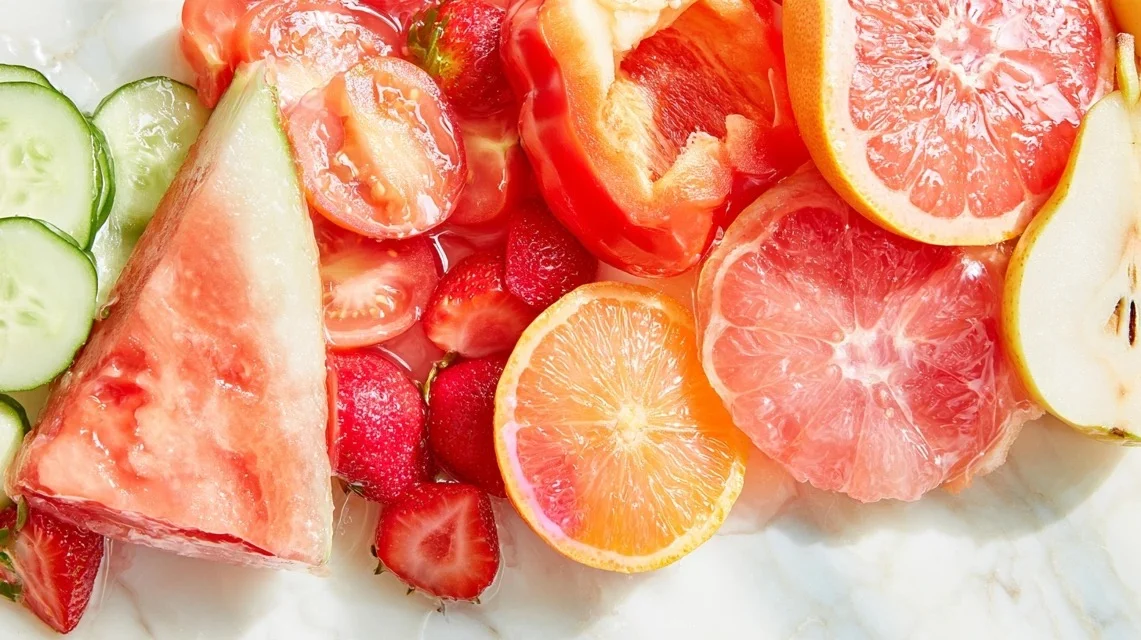
About a fifth of the water your body takes in each day typically comes from food.
And if you eat plenty of fruits, vegetables, soups, and other water-rich foods, that share can be even higher.
We don't think food gets nearly enough credit for keeping us hydrated.
How it works
Water from food contributes to your hydration just like water from beverages.
Once absorbed, it becomes part of the fluid your body uses to maintain blood volume, transport nutrients, regulate temperature, and support cells throughout your body.
But water-rich foods often bring more than water.
Potassium helps maintain fluid balance. Fruits and vegetables provide potassium, an electrolyte that works alongside sodium to regulate fluid balance and support normal muscle and nerve function.
Fiber supports digestion. Many fruits and vegetables contain fiber that holds water within the digestive tract. This helps maintain stool consistency and supports regular bowel movements.
Water and nutrients work together. Eating water-rich foods can contribute to hydration while also providing vitamins, minerals, and other compounds your body needs.
The foods that carry the most
Some everyday foods are almost entirely water.
Around 95% water: Cucumbers, lettuce, celery, zucchini, and tomatoes are among the most water-rich foods you can eat.
Around 90% or more: Watermelon, strawberries, bell peppers, spinach, and grapefruit also provide substantial amounts of water.
Still surprisingly high: Oranges, peaches, apples, pears, broccoli, and yogurt all contribute meaningful amounts to your daily intake.
The exact percentages vary by variety, preparation, and serving.
The surprising sources
Fruits and vegetables aren't the only foods that help with hydration.
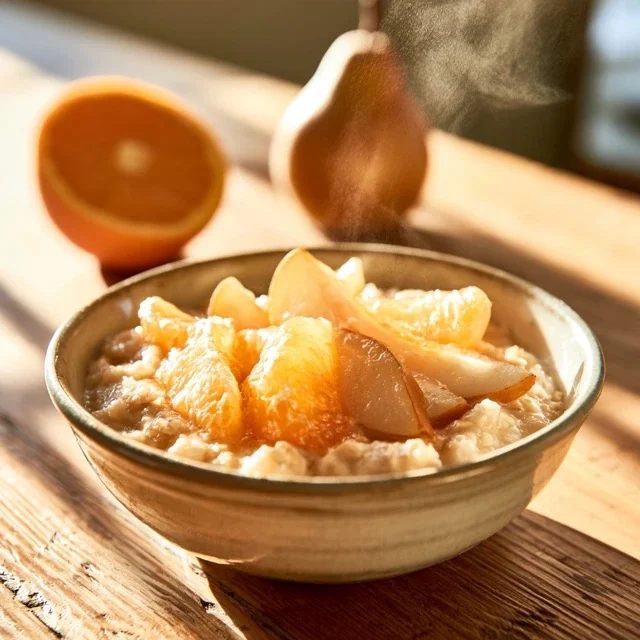
Cooked oatmeal can contain more than 80% water, depending on how it's prepared.
Cooked rice often contains roughly 65% to 70% water.
Cooked lentils and beans also absorb substantial amounts of water during cooking, making them another source of dietary water.
Soups, stews, and broths are especially useful examples because they combine water with vegetables, proteins, and other nourishing ingredients.
Hydration through the seasons
Summer produce often gets the most attention when we talk about hydration, but cooler months have plenty to offer.
Apples and pears are fall favorites, while many citrus varieties become more widely available through late fall and winter.
Warm meals count too.
A bowl of vegetable soup, cooked oatmeal, or a hearty lentil stew can provide both nourishment and fluid.
You don't have to rely on cold drinks or summer fruit to stay hydrated.
Getting enough
Hydration doesn't have to come from one source.
Drink water regularly, enjoy tea or other beverages you like, and include water-rich foods throughout your day.
Fresh, frozen, and canned produce can all contribute.
And remember that food doesn't replace the need to drink enough fluids, especially during exercise, hot weather, or illness.
The bigger picture is simple.
Every glass counts, but so does every bowl, bite, and meal.
Sources
- National Academies of Sciences, Engineering, and Medicine. Dietary Reference Intakes for Water, Potassium, Sodium, Chloride, and Sulfate.
- U.S. Department of Agriculture. FoodData Central.
- Centers for Disease Control and Prevention. About Water and Healthier Drinks.
- Harvard T.H. Chan School of Public Health, The Nutrition Source. Water.
- National Institutes of Health, Office of Dietary Supplements. Potassium Fact Sheet for Health Professionals.
This article is general health information, not medical advice. This site is published by Steap, the makers of Golden Glow tea. The tea pays for it. The articles are free.
Get the short version every week
Three articles, summed up in one email. Free.