Kids play without needing a reason.
They draw, build, dance, invent games, and spend hours doing things simply because they're fun.
Somewhere along the way, many adults stop making time for that kind of play.
But hobbies may be more important than we realize.
Research has linked participation in hobbies with greater life satisfaction, fewer depressive symptoms, and better cognitive wellbeing.
And the benefits often come from the things that make hobbies enjoyable in the first place: learning something new, getting absorbed in an activity, moving your body, creating something, or spending time with other people.
Why hobbies feel so good
Have you ever become so absorbed in something that you lost track of time?
Psychologists call this experience flow.
It can happen when you're painting, playing music, gardening, solving a puzzle, or doing something else that holds your attention.
Flow is more likely when an activity offers a balance between challenge and skill, giving you something meaningful to focus on without feeling overwhelmed.
These experiences are associated with enjoyment, engagement, and psychological wellbeing.
And they give your attention somewhere to go besides the demands of everyday life.
Quiet hobbies: keeping your brain engaged
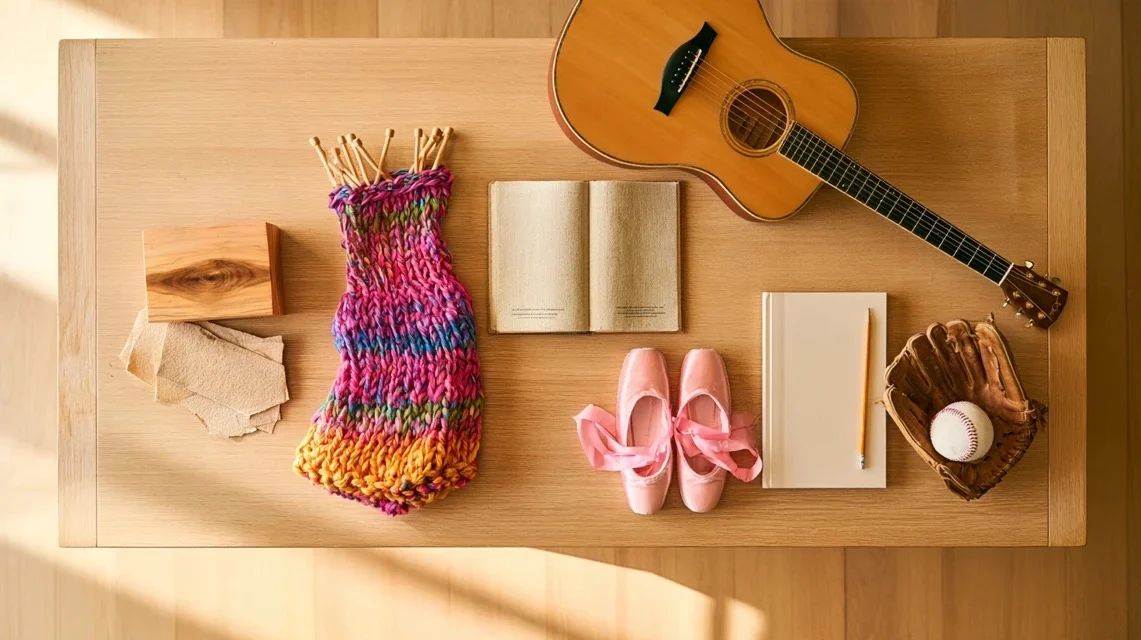
Knitting, quilting, woodworking, baking, reading, crosswords, sudoku, and jigsaw puzzles might look like ways to slow down.
But many of them ask your brain to do quite a lot.
They involve attention, memory, planning, problem-solving, or learning new skills.
Learning something new. In a study of older adults, participants who learned demanding new skills, such as quilting or digital photography, showed improvements in certain measures of memory compared with people assigned less challenging activities.
Puzzles and games. Regular engagement in mentally stimulating activities has been associated with better cognitive performance in observational studies.
In one clinical trial involving older adults with mild cognitive impairment, crossword training produced greater improvement on certain cognitive measures than computerized cognitive games.
These findings are promising, although they don't mean puzzles can prevent dementia or reverse brain aging.
Creative work. Activities such as knitting, crafting, and making art can provide a sense of accomplishment and opportunities for focused attention.
Research has also linked everyday creative activity with greater feelings of flourishing and positive emotion.
And many quiet hobbies leave you with something tangible.
A loaf of bread. A finished quilt. A painting. A completed puzzle.
You can see what you've made, and often how much you've improved.
Reading: more than a good story
Reading gives your brain something different to do.
Following a story involves language, attention, imagination, and memory as you connect characters, events, and ideas.
Observational research has associated regular book reading with longer survival among older adults, although this does not establish that reading itself extends life.
Other studies suggest that reading for pleasure may support wellbeing and help some people relax before bed.
And books offer something beyond measurable health outcomes.
They introduce new perspectives, expand vocabulary, and give you a chance to step into another world for a while.

Making music: a workout for your brain
Playing an instrument brings several abilities together.
You listen, coordinate your hands, remember patterns, follow rhythm, and adjust what you're doing in real time.
Learning an instrument can challenge attention, memory, movement, and executive function, the skills involved in planning and problem-solving.
Some studies have found associations between musical experience and better cognitive performance in older adulthood.
Researchers are still working to understand how much of that relationship comes from music itself and how much reflects other differences between people who do and don't play instruments.
You don't have to become an accomplished musician to enjoy it.
Learning a few chords, playing a familiar song, or joining a community music group can offer enjoyment and opportunities to keep learning.
Singing with others adds another ingredient: social connection.
Dancing: movement meets memory
Dancing combines physical activity with rhythm, coordination, memory, and often social interaction.
Remembering steps, responding to music, changing direction, and moving with a partner all require your brain and body to work together.
Research involving older adults suggests that dance programs can improve aspects of balance, physical function, and cognitive performance.
Some studies have also found benefits for mood and quality of life.
Long-term observational research has linked frequent dancing with a lower risk of dementia, although it cannot prove that dancing itself prevents the condition.
What makes dancing particularly appealing is that it doesn't always feel like exercise.
You're moving because the music makes you want to.
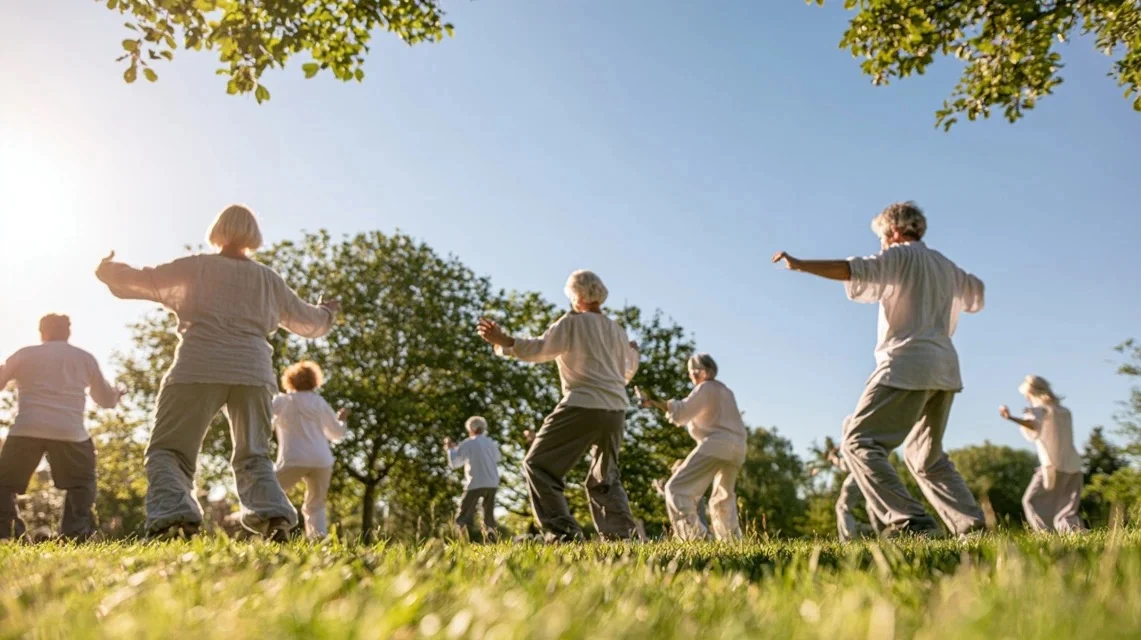
Playing outside: movement and nature
Outdoor hobbies can bring together several benefits at once.
Tennis, swimming, hiking, cycling, gardening, and casual games in the park all encourage physical activity.
Regular physical activity is associated with better cardiovascular health, improved mood, and a lower risk of several chronic diseases.
Spending time in natural environments may offer additional benefits.
Research suggests that time in green spaces can reduce perceived stress and support psychological wellbeing.
Some small studies have also found reductions in stress-related physiological measures after spending time in nature.
Gardening is a particularly good example.
It involves movement, planning, attention, and often time outdoors.
Digging, planting, carrying, and tending to plants can provide light to moderate physical activity, depending on the task.
Gardening programs have also been associated with improvements in wellbeing, mood, and social connection.
And growing something brings its own kind of satisfaction.
You care for something over time and get to watch it change.
Playing with other people
Some hobbies become even more meaningful when they're shared.
Book clubs, recreational sports, game nights, dance classes, knitting circles, and community gardens create natural opportunities to spend time with others.
And social connection is closely tied to health.
A large meta-analysis found that people with stronger social relationships had better odds of survival than those with weaker social ties.
That doesn't mean joining a book club guarantees a longer life.
It does suggest that relationships deserve a place in how we think about long term wellbeing.
Shared hobbies make connection easier because there's already something bringing everyone together.
You don't have to invent a reason to meet.
You simply show up and do something you enjoy.
Finding yours
The best hobby isn't necessarily the one with the longest list of health benefits.
It's the one you actually enjoy doing.
Something you loved as a child can be a good place to start.
Maybe you used to draw, dance, play an instrument, build things, ride your bike, or spend hours outside.
Or maybe there's something you've always wanted to try.
You don't have to be good at it.
In fact, being a beginner can be part of the appeal. Learning something unfamiliar gives you opportunities to practice, make mistakes, and notice your progress.
And hobbies don't need to become another thing to achieve.
You don't have to turn your painting into a business, your walks into a fitness challenge, or your baking into a competition.
Sometimes, doing something simply because you enjoy it is reason enough.
Making time for play isn't time wasted.
It's another way to care for yourself.
Sources
- Mak HW et al. Hobby Engagement and Mental Wellbeing Among People Aged 65 Years and Older in 16 Countries. Nature Medicine, 2023.
- Park DC et al. The Impact of Sustained Engagement on Cognitive Function in Older Adults: The Synapse Project. Psychological Science, 2014.
- Devanand DP et al. Computerized Games versus Crosswords Training in Mild Cognitive Impairment. NEJM Evidence, 2022.
- Bavishi A et al. A Chapter a Day: Association of Book Reading with Longevity. Social Science & Medicine, 2016.
- Verghese J et al. Leisure Activities and the Risk of Dementia in the Elderly. New England Journal of Medicine, 2003.
- Holt-Lunstad J et al. Social Relationships and Mortality Risk: A Meta-analytic Review. PLOS Medicine, 2010.
- Fancourt D, Finn S. What Is the Evidence on the Role of the Arts in Improving Health and Well-being? World Health Organization Regional Office for Europe, 2019.
This article is general health information, not medical advice. This site is published by Steap, the makers of Golden Glow tea. The tea pays for it. The articles are free.
Get the short version every week
Three articles, summed up in one email. Free.