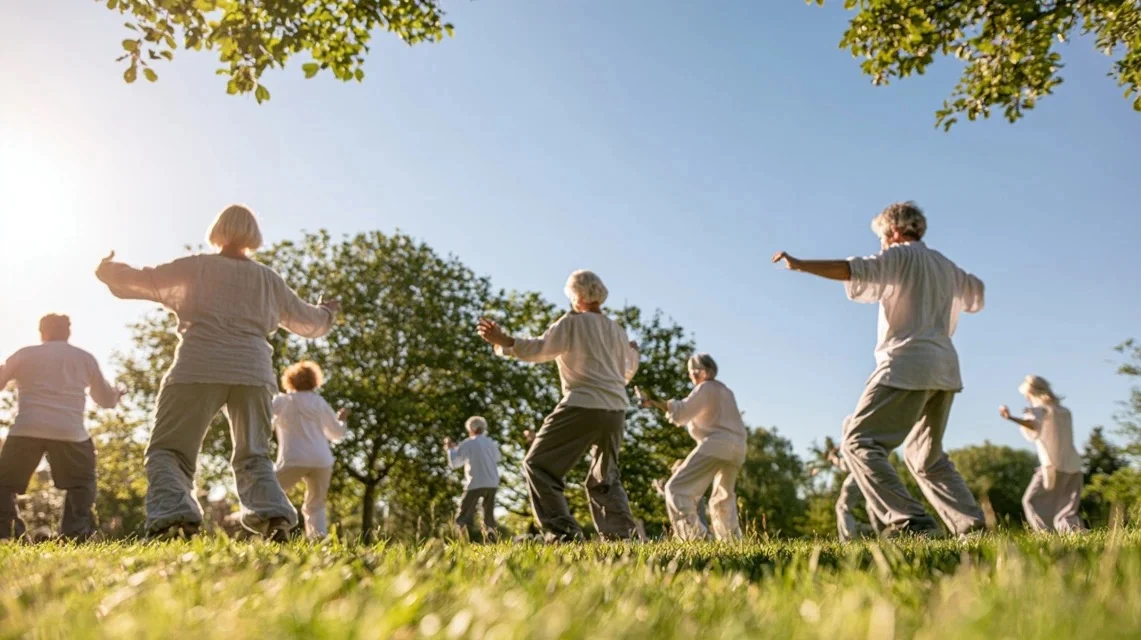
Muscle does far more than help you lift things.
Your skeletal muscles are one of the largest places your body stores and uses glucose. They help stabilize your joints, support your posture, and create the forces that keep your bones strong.
They also help you stay balanced, steady on your feet, and capable of doing the things you enjoy.
And those abilities become increasingly important with age.
What happens without it
Muscle is maintained, in part, by use.
As we get older, muscle mass and strength naturally tend to decline. This process can begin gradually in adulthood and often becomes more noticeable later in life.
Inactivity can accelerate that decline.
The changes are often subtle at first.
Carrying groceries may feel heavier. Getting up from a low chair might take more effort. Climbing stairs or getting up from the floor may become harder than they used to be.
Over time, losing muscle and strength can affect mobility, balance, and independence.
But age-related muscle loss is not entirely inevitable.
What happens when you challenge your muscles
Your muscles retain the ability to adapt throughout life.
When you ask them to work against resistance, they respond by becoming stronger. With consistent training, muscle size can increase too.
And this ability doesn't disappear with age.
Research has shown that even adults in their eighties and nineties can make meaningful improvements in strength through progressive resistance training.
Some strength gains can appear within weeks, partly because your nervous system becomes better at activating the muscles you already have.
Building additional muscle tissue generally takes longer.
The important part is that you don't need years of training experience to begin benefiting.
Your body can respond to a new challenge at almost any age.
What counts as strength training
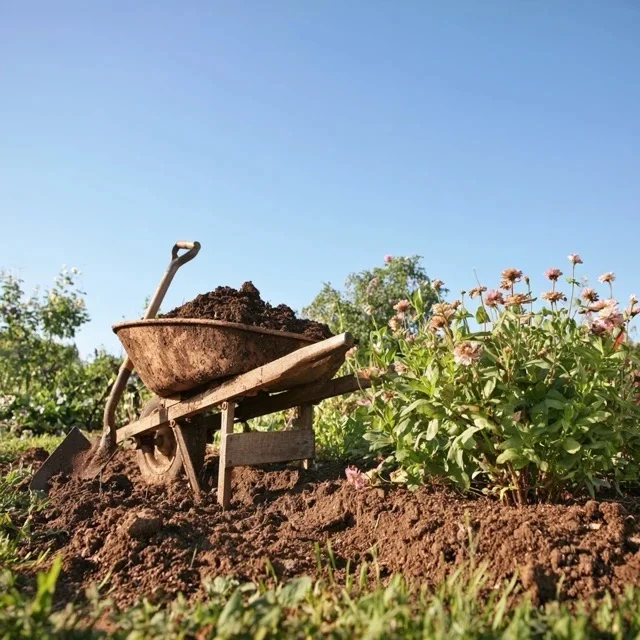
Strength training doesn't have to happen in a gym.
It simply means asking your muscles to work against resistance.
Lifting weights challenges your muscles through controlled movements.
Resistance bands provide adjustable resistance and can be used almost anywhere.
Bodyweight exercises such as squats, wall push-ups, and push-ups against a kitchen counter use your own weight as resistance.
Everyday activities such as carrying groceries, climbing stairs, and gardening can also challenge your muscles, depending on how demanding they are.
What matters is that the activity requires enough effort to stimulate your muscles.
As you become stronger, the same activity may begin to feel easier. Gradually increasing the resistance, repetitions, or difficulty helps your muscles continue adapting.
This is called progressive overload.
How much is enough
You don't need to train every day to build strength.
General physical activity guidelines recommend muscle-strengthening activities involving all major muscle groups on at least two days each week.
That includes your legs, hips, back, abdomen, chest, shoulders, and arms.
The right amount of resistance depends on your experience, health, and current abilities.
If you're new to strength training, starting with manageable exercises and gradually increasing the challenge is a practical approach.
Consistency matters more than doing everything at once.
Feeding your muscles
Movement provides the stimulus, but your body also needs the raw materials to adapt.
Protein supplies amino acids that your muscles use to repair and build tissue.
After resistance exercise, your body increases muscle protein synthesis, the process of building new muscle proteins.
Getting enough protein throughout the day helps support this process.
Foods such as eggs, yogurt, fish, poultry, tofu, lentils, beans, and other protein-rich options can all contribute.
Distributing protein across meals can be a practical way to meet your daily needs, although your total protein intake and training habits matter most.
Strength for the long run
Strength isn't only about how much weight you can lift.
It's about being able to carry your groceries, climb stairs, get up from the floor, travel, play with your family, and continue doing the things that matter to you.
You don't need to start with heavy weights or complicated exercises.
You just need to give your muscles a reason to keep working.
Because strength isn't reserved for a certain age.
It's something you can keep building.
Sources
- U.S. Department of Health and Human Services. Physical Activity Guidelines for Americans, 2nd Edition.
- Centers for Disease Control and Prevention. Adult Activity: An Overview.
- National Institute on Aging. Exercise and Physical Activity: Your Everyday Guide.
- Fiatarone MA et al. High-Intensity Strength Training in Nonagenarians: Effects on Skeletal Muscle. JAMA, 1990.
- American College of Sports Medicine. Progression Models in Resistance Training for Healthy Adults. Medicine & Science in Sports & Exercise, 2009.
- Morton RW et al. A Systematic Review, Meta-analysis and Meta-regression of the Effect of Protein Supplementation on Resistance Training-Induced Gains in Muscle Mass and Strength in Healthy Adults. British Journal of Sports Medicine, 2018.
This article is general health information, not medical advice. This site is published by Steap, the makers of Golden Glow tea. The tea pays for it. The articles are free.
Get the short version every week
Three articles, summed up in one email. Free.